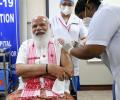
Covaxin was found to have 78 per cent efficacy against COVID-19 of any severity, 14 or more days after the second dose, and is extremely suitable for low- and middle-income countries due to easy storage requirements, said the global health body.
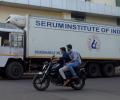
There were no safety concerns arising from the study data and Covovax is safe and immunogenic in the adult population, Prakash Kumar Singh, Director, Government and Regulatory Affairs at the Serum Institute of India (SII), is learnt to have said in the application sent to the DCGI.
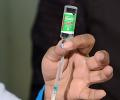
If the DCGI grants regular marketing authorisation, Covishied will be the second vaccine in the world to receive such approval.
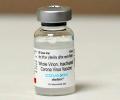
The Subject Expert Committee on COVID-19 examined the data and deliberated on the EUA application on Monday.
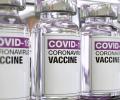
With talks underway between the central government and Zydus Cadila over the pricing of the COVID-19 vaccine ZyCov-D, the pharma company is learnt to have proposed a price of Rs 1,900 for its three-dose jab that can be given to those above 12 years of age.
The development comes after Prakash Kumar Singh, the Director, Government and Regulatory Affairs at SII, informed the Union health ministry that the firm would be able to supply 20.29 crore doses of Covishied in the month of September.
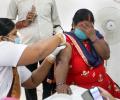
Not enough data has been generated locally to decide on the need for a booster dose of COVID-19 vaccine for those fully inoculated, say experts amid the possibility of a third wave of the viral disease hitting the country between September and October.
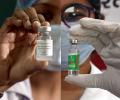
The panel also recommended giving approval to Bharat Biotech for carrying out a study on interchangeability of its Covaxin and the under-trial adenoviral intranasal vaccine candidate BBV154, but asked the Hyderabad-based firm to remove the word "interchangeability" from the study title and submit a revised protocol for approval.
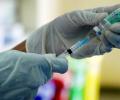
An expert panel of India's Central Drug Authority on Tuesday recommended granting permission to Serum Institute of India (SII) for conducting phase 2/3 trials of Covid vaccine Covovax on children aged 2 to 17 years with certain conditions, official sources said.
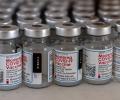
India's drug regulator Drugs Controller General of India has granted permission to Mumbai-based pharmaceutical company Cipla to import Moderna's COVID-19 vaccine for restricted emergency use in the country, official sources said on Tuesday.

India will share the development story of Co-WIN, the digital platform that helped it launch and implement a nationwide COVID-19 vaccination programme, with more than 20 countries that have shown interest in adopting the portal to run their own inoculation drives.
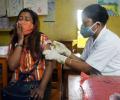
Several private hospitals across the country said they have no clarity on procuring COVID-19 vaccines under the new policy announced by Prime Minister Narendra Modi and that it has led to the vaccination being put on hold at their centres.
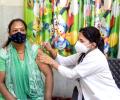
A group of public health experts, including doctors from All India Institute of Medical Sciences and members from the national taskforce on COVID-19, have said that mass, indiscriminate and incomplete vaccination can trigger emergence of mutant strains and recommended that there is no need to inoculate those who had documented coronavirus infection.

The Drugs Controller General of India (DCGI) has granted permission to the Serum Institute of India (SII) to manufacture the Sputnik COVID-19 vaccine in India for examination, test and analysis with certain conditions, official sources said.
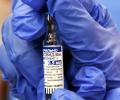
The government is hopeful of a speedy launch of single-dose COVID-19 vaccine Sputnik Light in India and all stakeholders, including the Russian manufacturer and its Indian partners, have been directed to fast-track the application and regulatory approval procedures for the jab to boost the country's vaccination drive, sources said.
Providing data, it said UK's Public Health England has reported high vaccine effectiveness (87.9 per cent) against the B.1.617.2 variant, most reported in India, in an observational study (concluded on May 22, 2021).
According to the sources, there are limited prospects of J&J exporting its vaccine from the US to other countries in the near future and the "entire production" at the BE facilities in India, beginning July/August, will be handed over to the pharma giant under a contract between the companies.
Currently, the country is using two 'made-in India' jabs -- Covishield and Covaxin -- to inoculate its billion-plus population and has administered 20 crore doses since launching the world's largest vaccination drive in mid-January. A third vaccine, Russian-made Sputnik V, has been approved by the government and is being used on a smaller scale at present.
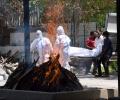
Coronavirus doesn't remain active in nasal and oral cavities 12 to 24 hours after the death of an infected person as a result of which the risk of transmission from the deceased is highly unlikely, All India Institute of Medical Sciences Forensic Chief Dr Sudhir Gupta said.
Several states and UTs including Delhi, Maharashtra, Karnataka and Telangana have decided to opt for global tenders for procurement of anti-coronavirus shots with the domestic supply falling short to meet the rising demand.
 © 2026 Rediff.com - Investor Information - Advertise with us - Disclaimer - Privacy Policy - Sitemap - Feedback - About us - Terms of use - Grievances